

The new measure asks a question GDP alone cannot answer: is economic progress helping people flourish?
The forum, titled "A Nation Where Young People Have Hope: Beyond GDP, Toward GDH," was co-hosted by the Hon. Baek Sun-hee, Member of the National Assembly, ICSB, and Policy Space for Inclusion and Innovation. Researchers, policymakers, and international participants, including delegations from China and Indonesia, took
For ICSB, the day marked a step from research to public conversation. A measure developed in academic work was presented in the room where a nation debates its priorities.
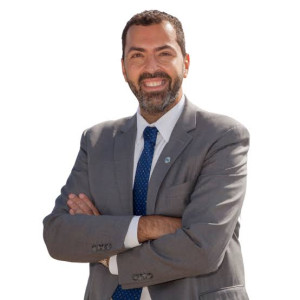
GDH was developed by Dr. Ayman ElTarabishy, President and CEO of ICSB, and Professor Ki-Chan Kim, Chair of ICSB. It builds on the 2026 ICSB Human-Centered Entrepreneurship Index, which assesses 43 economies on two dimensions: entrepreneurial activity and human flourishing.
The Index draws on survey data from the Global Entrepreneurship Monitor and the Gallup World Poll. Entrepreneurship covers innovation, risk-taking, and pro-activeness. Human flourishing covers whether people are thriving, have full-time employment, and are engaged at work.
GDH combines the two dimensions into a single score using a geometric mean, the same method the United Nations Development Program uses for its Human Development Index. Under this approach, strong performance on one dimension cannot fully offset weaker performance on the other.
While the published HCE Index weights the two pillars equally through an arithmetic average, GDH uses a geometric mean, placing greater emphasis on balanced performance between entrepreneurship and human flourishing.
"GDP asks how much a country makes. GDH asks how much a country helps its people flourish," said Dr. ElTarabishy. GDH does not replace GDP. It adds the part GDP leaves out.
Korea scores 80 in entrepreneurship, ranking second of 43 economies, and first in risk-taking. It scores 44 in human flourishing, ranking 26th. The 36-point difference between its two pillars is the largest among the economies studied.
That combination makes Korea a central case for the questions GDH is designed to ask. Korea has shown the world how to build an entrepreneurial economy. The next question is how that strength can translate into broader gains in people's lives, especially for young people.
The Index compares economies at one point in time. It identifies patterns that appear together but does not establish their causes.
Professor Kim presented findings from the GDH Korea Country Report 2026, including a national policy report titled "From More Jobs to Jobs Where People Flourish: Beyond GDP to GDH.“
The report examines how Korea can build on its entrepreneurial achievements to create opportunities for younger generations to develop their potential through meaningful employment, education, and participation in economic life. It argues that policy should ask not only how many jobs are created, but how much people can grow in them.
"If GDP measures a country's economic production and growth, GDH adds the lens of human flourishing to economic growth," said Professor Kim. "Entrepreneurship is the means; human flourishing is the purpose.“
Dr. ElTarabishy and Professor Kim have worked together on human-centered entrepreneurship for more than a decade. GDH is the latest step in that collaboration.
In remarks published in the forum proceedings, Representative Baek said economic growth should help more people realize their potential, placing young people at the center of that question.
She outlined plans to establish a National Assembly members' research group on young people's employment, housing, and the social safety net. The group would bring young people and experts together to inform future policy and legislative discussions.
Park Neung-hoo, head of Policy Space for Inclusion and Innovation, noted Korea's success in achieving both industrialization and democratization in a short period. He also pointed to the difficulties young people face in finding good jobs and affordable housing.
The forum also introduced a proposed New Deal for Korea, organized around three themes:
▲Hope: a future worth believing in
▲Harmony: a society that moves together
▲Human Flourishing: the opportunity to reach one's potential
The New Deal is a proposed research and policy framework, not an adopted government initiative.
Ambassador Martín García Moritán, an ICSB Fellow, former Permanent Representative of Argentina to the United Nations, and a key contributor to the establishment of UN MSMEs Day, put forward an initiative on Senior and Intergenerational Human-Centered Entrepreneurship as part of the broader GDH agenda.
The initiative seeks to extend the human-centered entrepreneurship agenda across generations, examining how younger and older entrepreneurs can exchange knowledge, create opportunities, and contribute to human flourishing throughout life. It also opens a potential new area of international research and collaboration for ICSB.
ICSB advances research that helps policymakers make informed decisions. Through internationally comparable evidence and academic collaboration, it seeks to bridge entrepreneurship research and public policy while leaving policy decisions to the appropriate institutions.
ICSB will publish the Index annually and use GDH to inform research and policy discussions on entrepreneurship, employment, education, and well-being. The conversation continues this week at the Jinju International Forum on Entrepreneurship on October 19.
The research framework underlying GDH is presented in Dr. ElTarabishy's peer-reviewed article on the Human-Centered Entrepreneurship Index, published in the Journal of the International Council for Small Business. Full results are available at icsb website










![여야, 국세청 '무리한 과세' 질타...”납세자 죽음 내몰아”[국감]](https://img.etoday.co.kr/crop/85/60/2402711.jpg)
![우희종 마사회장 “과천경마장 이전비 정부 보장 필요” [국감]](https://img.etoday.co.kr/crop/85/60/2402710.jpg)


![[장외시황] 노바셀테크놀로지, 2.79% 상승](https://img.etoday.co.kr/crop/85/60/2402702.jpg)


!['2026 노원 달빛산책' 조형물 들어선 당현천 [포토]](https://img.etoday.co.kr/crop/300/190/2402635.jpg)
